



















The Sun
| Type | Star |
|---|---|
| Diameter | 1.3927M Km |
| Mass | 1.989 × 10^30 kg |
| Surface Temp | 5,778K |
| Orbital Period | N/a |
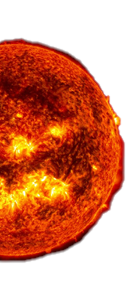
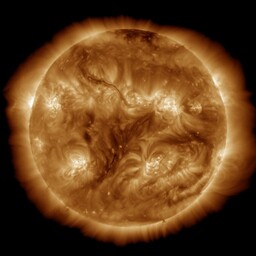
The Sun is the central object holding our solar system together, located in the Orion Spur of the Milky Way Galaxy. Although it is important to us, in the grand scheme of the universe, our star is not very unique. The Sun was formed about 4.6 billion years ago. Its nearest stellar neighbor is the Alpha Centauri system.
Parker Solar Probe
| Type | Probe |
|---|---|
| Diameter | 1.3927M Km |
| Launch Date | 12 Aug 2018 |
| Orbital Period | 88 Days |
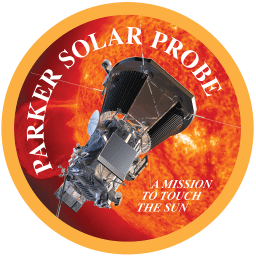
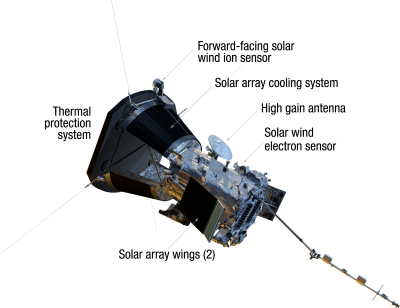
The Parker Solar Probe is a mission headed by NASA. It aims to observe the outer corona and other parts of the sun. The probe is in the orbit of Mercury. The data collected during this mission will help us to further understand what impact the sun has on our planet, from predicting solar weather to further understanding solar wind. To achieve its goal the probe has been equipped with four sets of instruments to study magnetic fields, plasma, energetic particles, and image solar wind.
It's really interesting to see how they were able to heatproof this thing with it being so close to the sun. Other trips like MESSENGER have had issues with the heat. The probe and its instruments are protected by a heat shield able to withstand up to 1,377C. The probe has made a couple major discoveries so far. First, it has discovered magnetic switchbacks in which the magnetic field of the solar winds suddenly flip. The probe has also discovered 20 sungrazer comets (comets too close to the sun to be detected from earth).
Mercury
| Type | Planet |
|---|---|
| Diameter | 4,879.4 km |
| Mass | 0.055 Earths |
| Surface Temp | 437 K |
| Orbital Period | 115.88 Days |
| Moons | 0 |
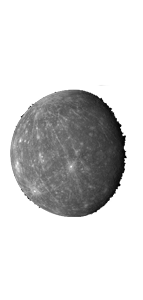
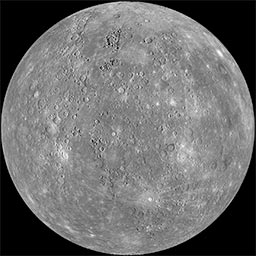
Mercury is a rocky planet close to the sun. It is the smallest planet in the solar system (only slightly bigger than the moon). Although Mercury is closer to the sun, it's actually Venus which is the hottest in the solar system. Mercury has an axial tilt which causes its poles to be permanently shadowed, this could mean that there is water ice present on the planet.
Venus
| Type | Planet |
|---|---|
| Diameter | 12,104 km |
| Mass | 0.815 Earths |
| Surface Temp | 232 K |
| Orbital Period | 224.701 Days |
| Moons | 0 |
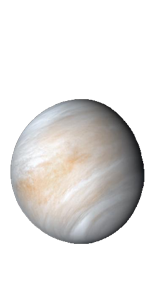
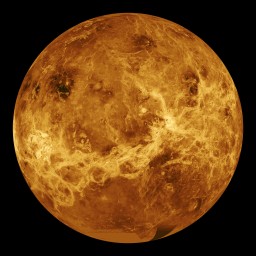
Venus is a terrestrial planet and one of our neighbors (often described as one of the sister planets to earth). Venus has one of the thickest atmospheres in the solar system. Many craters are found on the surface of venus (all in near pristine condition), suggesting that it may have gone through a major resurfacing event in the past couple hundred-million years.
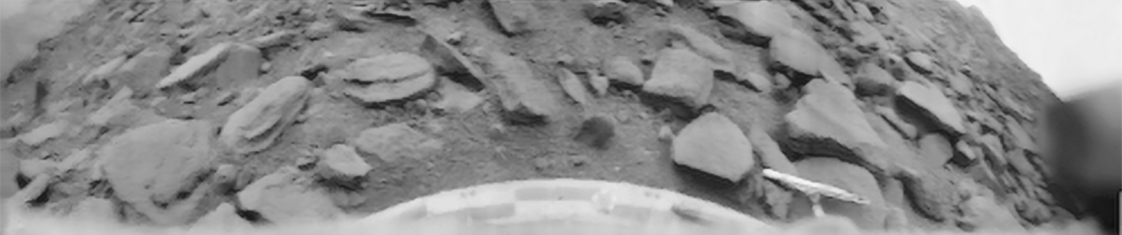
Venus was visited by multiple landers during the Venera series of missions. These missions were all failures with the probes breaking in the atmosphere, or not long after landing (due to the heat, as well as the atmosphere). Luckily they were able to snap a couple pictures of the surface of venus, such as the one below.
Earth
| Type | Planet |
|---|---|
| Diameter | 12,742 km |
| Mass | 1 Earth |
| Surface Temp | 255 K |
| Orbital Period | 365.256 Days |
| Moons | 1 |
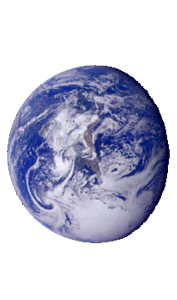
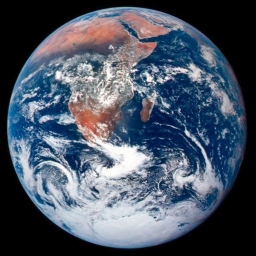
Our home planet! (unless you're not from this planet) Earth is pretty unique compared to much of the rest of the solar system. Earth is one of the only planets with liquid water, magnetic poles, plate tectonics, life, tidal forces, among other things.
The Moon
| Type | Moon |
|---|---|
| Diameter | 3,474.8 km |
| Mass | 0.0123 Earths |
| Surface Temp | 250 K |
| Orbital Period | 27.321 Days |
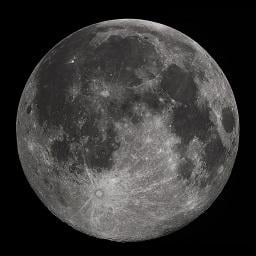
The Moon is the one and only moon of Earth (named such because it is a moon). The moon is theorized to have been created when an object known as Theia collided with the earth.
Ryugu & Hayabusa2
Ryugu
| Type | Asteroid |
|---|---|
| Diameter | 900 M |
| Surface Temp | 373 K |
| Orbital Period | 1.3 Years |
Hayabusa2
| Type | Lander |
|---|---|
| Agency | JAXA |
| Launch Date | 3 Dec 2014 |
| Return Date | 5 Dec 2020 |
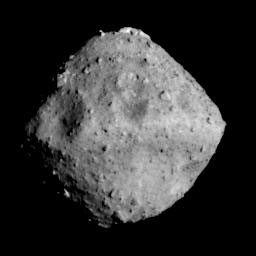
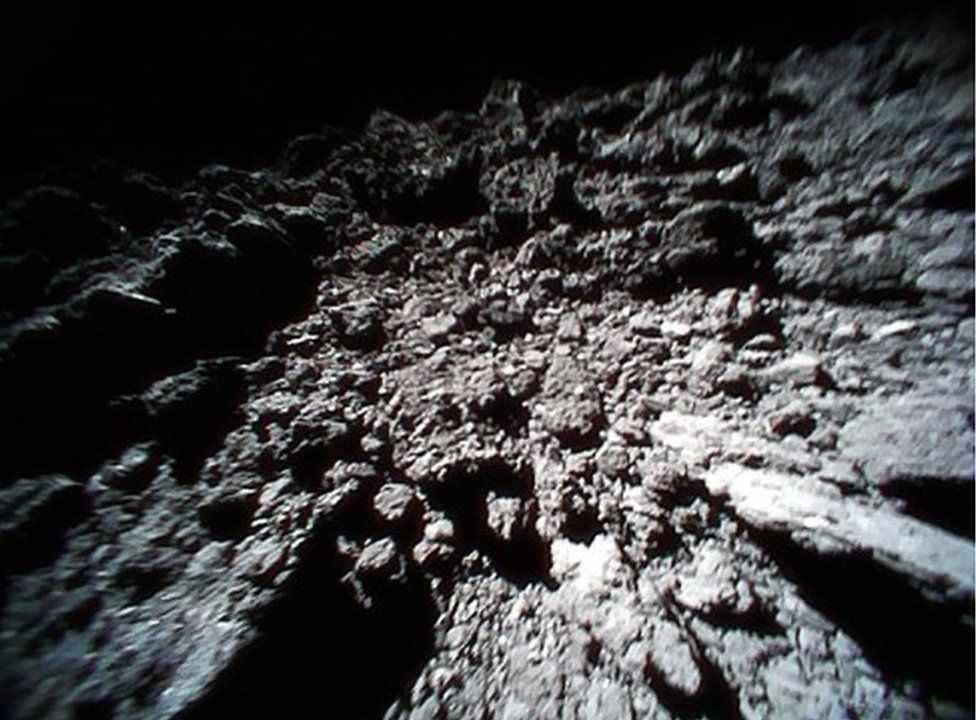
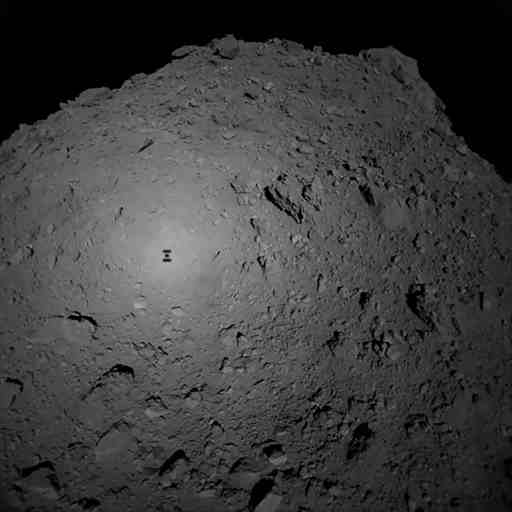
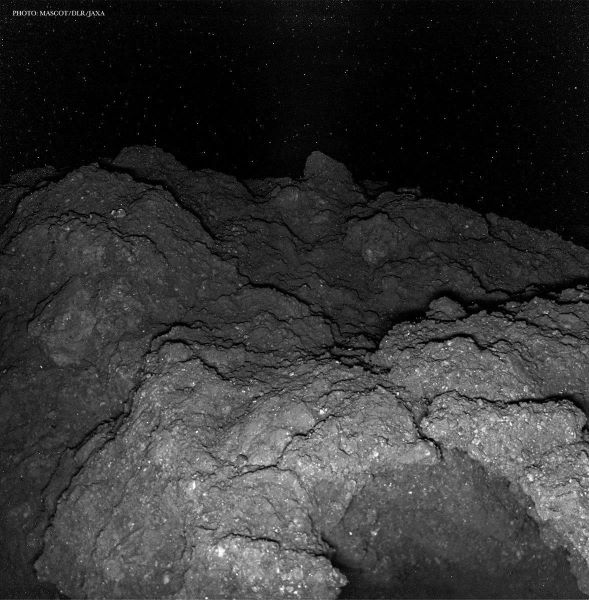
Ryugu is a near earth asteroid and the location of Hayabusa2's first mission. In the samples returned by Hayabusa2 we were able to find organic compounds such as uracil and vitamin B3 (suggesting that these things could have originally been created outside of earth).
Hayabusa2 is the successor to the Hayabusa probe. Hayabusa2 brought a couple little guys called MINERVA along with it. MINERVA is small rover for exploring the surface of asteroids (such as ryugu). One of my favorite parts of this mission is the pictures captured by the MINERVA. Hayabusa2 successfully completed its mission and is going back for another try at a different asteroid.
Deimos
| Type | Moon |
|---|---|
| Diameter | 12.4 km |
| Mass | 1.51×10^15 kg |
| Surface Temp | 233 K |
| Orbital Period | 1.263 Days |
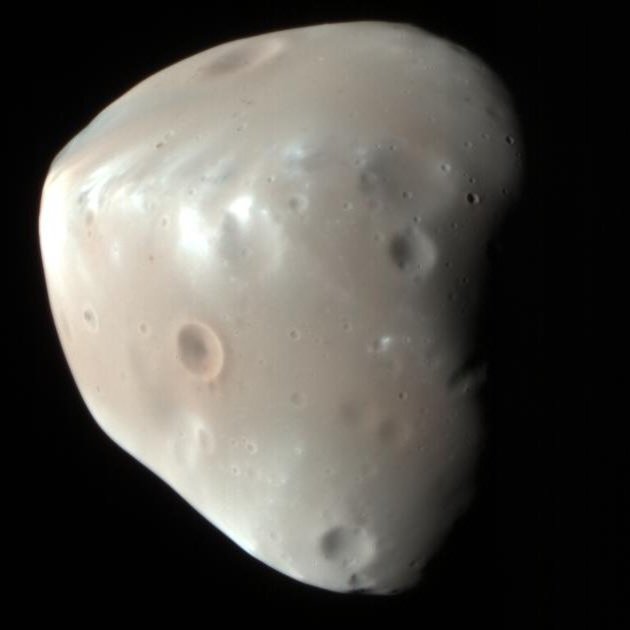
Deimos is the smallest of the two moons of mars. Its smooth appearance comes from its craters being filled with regolith (a dustlike substance). JAXA's MMS mission will fly by Deimos on its way to Phobos to do some remote observations. There's not too much else interesting about Deimos.
Phobos
| Type | Moon |
|---|---|
| Diameter | 22.533 km |
| Mass | 1.060×10^16 kg |
| Surface Temp | 233 K |
| Orbital Period | 0.318 Days |
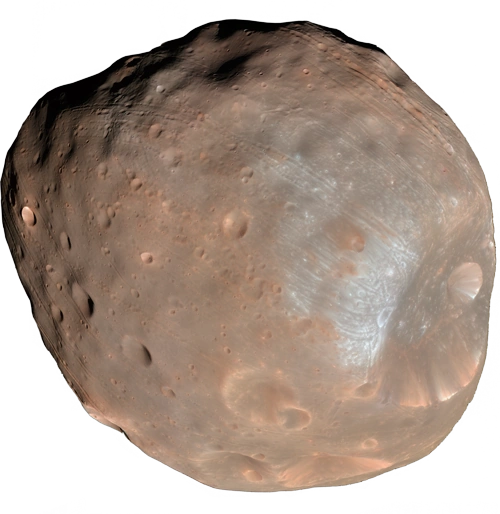
Phobos is the larger of the two martian moons. Phobos is thought to be a rubble pile (making it very fragile). Phobos is currently on its way to crashing into mars in about 50 million years, or could possibly break up into a ring lasting 1-100 million years around mars.
Mars
| Type | Planet |
|---|---|
| Diameter | 6,779 km |
| Mass | 0.107 Earths |
| Surface Temp | 209 K |
| Orbital Period | 686.980 Days |
| Moons | 2 |
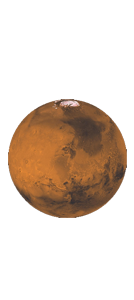
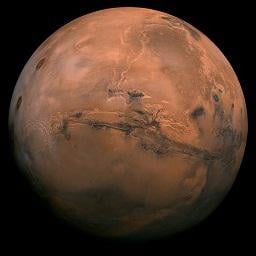
Mars is the only other populated planet in the solar system (populated by rovers). Mars is known for its red coloring, which comes from an abundance of iron oxide on its surface. It is suspected that Mars may have once been much like earth, such as once having liquid water.
Asteroid Belt
| Type | Belt |
|---|
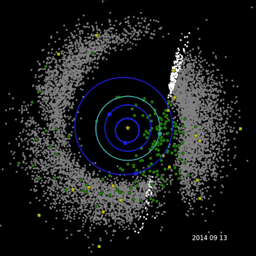
The asteroid belt is a region between Mars and Jupiter filled with asteroids (obviously). The asteroid belt is home to the dwarf planet Ceres. Despite how it's often depicted, the asteroid belt is not very dense (most probes which fly through don't even encounter objects).
Ceres
| Type | Dwarf Planet |
|---|---|
| Diameter | 946 km |
| Mass | 0.00016 Earths |
| Surface Temp | 110 K |
| Orbital Period | 4.60 Days |
| Moons | 0 |
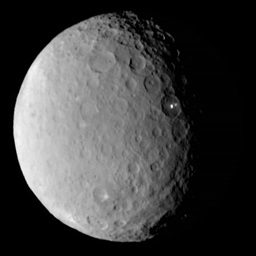
Ceres is a small rocky dwarf planet in the asteroid belt. It is the largest object in the belt. Ceres is the smallest of the dwarf planets after Sedna. Ceres was once considered an asteroid, but that has since changed. Ceres has a small exosphere as well as cryovolcanos which occasionally spew liquid water.
Jupiter
| Type | Gas Giant |
|---|---|
| Diameter | 142,800 km |
| Mass | 317.8 Earths |
| Surface Temp | 165 K |
| Orbital Period | 11.86 Years |
| Moons | 95 |
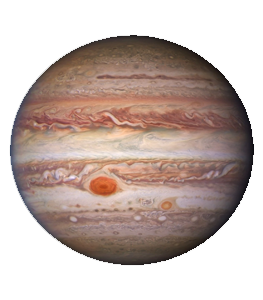
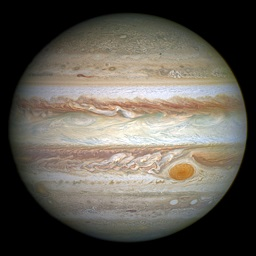
Jupiter is the first of the gas giants and the largest planet in our solar system. Jupiter is mostly composed of hydrogen. Jupiter's outer atmosphere is thick and turbulent, causing many storms on its surface such as the big red spot.
Io
| Type | Moon |
|---|---|
| Diameter | 3,643.2 km |
| Mass | 0.015 Earths |
| Surface Temp | 110 K |
| Orbital Period | 1.769 Days |
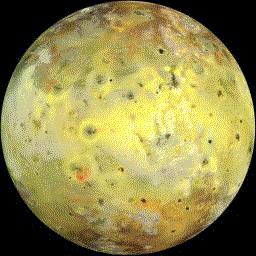
Io is a moon of Jupiter. Io's surface is covered in over 400 volcanoes many of which erupt sulfur and sulfur dioxide giving io its unique coloring. These volcanos make Io the most geologically active object in the whole solar system.
Callisto
| Type | Moon |
|---|---|
| Diameter | 4,820.6 km |
| Mass | 0.018 Earths |
| Surface Temp | 134 K |
| Orbital Period | 16.689 Days |
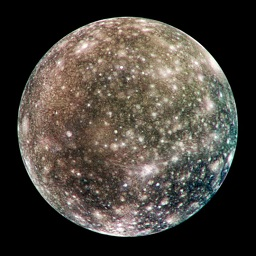
Callisto is a moon of Jupiter. Callisto is thought to be the oldest, as well as the most cratered object in the solar system. Callisto gets its shiny look from impact craters being topped with water ice. Callisto has kept its pristine craters as there is no active volcanoes or tectonic shifts.
Ganymede
| Type | Moon |
|---|---|
| Diameter | 5,268.2 km |
| Mass | 0.025 Earths |
| Surface Temp | 110 K |
| Orbital Period | 7.154 Days |
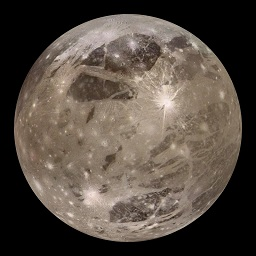
Ganymede is a moon of Jupiter as well as the largest moon in the solar system and the largest object in general without an atmosphere. Ganymede's surface is mostly composed of silicate rock, but it is thought to also have water ice.
Europa
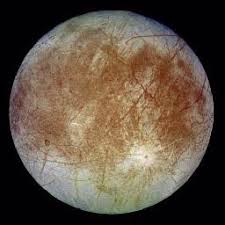
| Type | Moon |
|---|---|
| Diameter | 3,121.6 km |
| Mass | 0.008 Earths |
| Surface Temp | 102 K |
| Orbital Period | 3.551 Days |
Europa is a moon of Jupiter. Due to its young appearance and water ocean Europa is often thought to be one of the only objects in our solar system to harbor life. Europa has the smoothest surface of any object in our solar system. The dark streaks on Europa's surface are known as lineae and are thought to have been created similarly to ocean ridges on earth.
Saturn
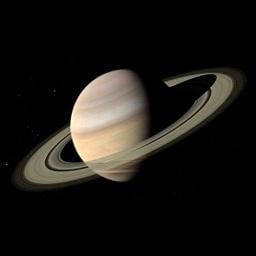
| Type | Gas Giant |
|---|---|
| Diameter | 120,536 km |
| Mass | 95.159 Earth |
| Surface Temp | 124 K |
| Orbital Period | 29.4475 Years |
| Moons | 146 |
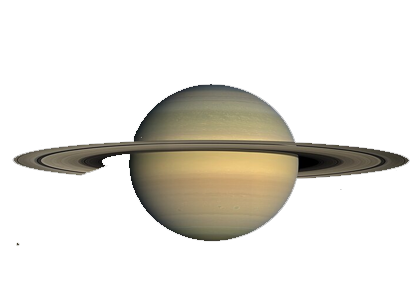
Saturn is the 2nd largest planet in the solar system. Saturn is best known for its large rings. Saturn has the most moons in the solar system (146 not counting its many moonlets in its rings). Saturn is thought to have a rocky core surrounded by an atmosphere of metallic hydrogen.
Mimas
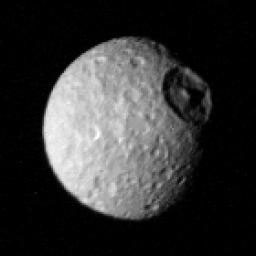
| Type | Moon |
|---|---|
| Diameter | 396.4 km |
| Mass | 0.0311 Earths |
| Surface Temp | 64 K |
| Orbital Period | 0.942 Days |
Mimas is a moon of Saturn, it is the smallest object rounded by its own gravity (has about the land area of Spain). Due to its low density it is thought that mimas is mostly composed of water ice rather than rock. Mimas features a large crater named Hershel (not the inspiration for the death star; the crater was not known at the time of Star Wars' release.)
Titan
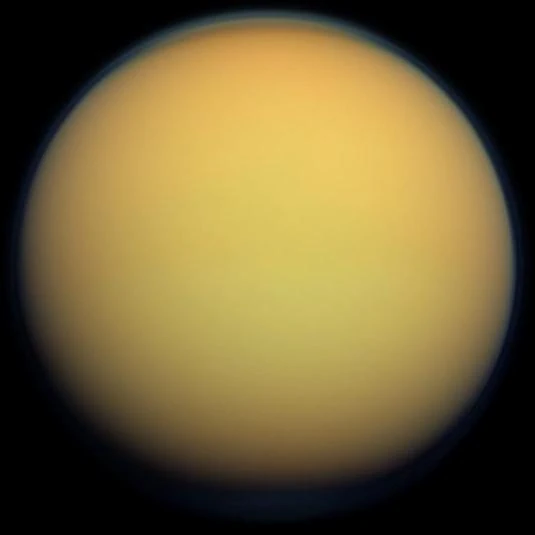
| Type | Moon |
|---|---|
| Diameter | 5,149.5 km |
| Mass | 0.0225 Earths |
| Surface Temp | 93.7 K |
| Orbital Period | 15.945 Days |
Titan is one of the moons of Saturn. Titan is the only moon to have an atmosphere thicker than Earths. It is also the only other object that we have clear evidence of surface water on. Titan will be home to the Dragonfly quadcopter in the near future.
Enceladus
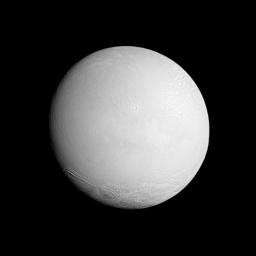
| Type | Moon |
|---|---|
| Diameter | 504.2 km |
| Mass | 0.0395 Earths |
| Surface Temp | 75 K |
| Orbital Period | 1.37 Days |
Enceladus is a moon of Saturn. Enceladus is covered in bright ice and snow making it the most reflective body in the solar system, and much colder than the rest of Saturn's moons. Enceladus's liquid ocean is often a target for astrobiologists due to the warmth it has.
Tethys
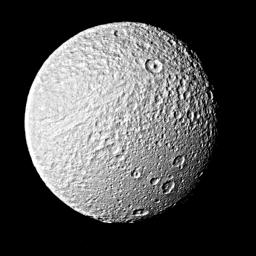
| Type | Moon |
|---|---|
| Diameter | 1,062 km |
| Mass | 1.03×10^−4 Earths |
| Surface Temp | 86 K |
| Orbital Period | 1.887 Days |
Tethys is a moon of Saturn. Tethys has the lowest density of any moon in the solar system (suggesting it is made of mostly ice). Tethys is covered in many smooth planes and hills.
Dione
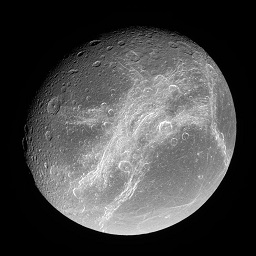
| Type | Moon |
|---|---|
| Diameter | 1,122.8 km |
| Surface Temp | 87 K |
| Orbital Period | 2.736 Days |
Dione is a moon of Saturn. Dione is a fairly uninteresting body composed of mostly rock.
Rhea
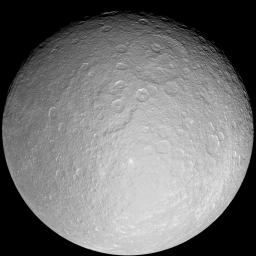
| Type | Moon |
|---|---|
| Diameter | 1,527.6 km |
| Surface Temp | 53 K |
| Orbital Period | 4.518 Days |
Rhea is a moon of Saturn. Rhea is mostly composed of silicate rock. It is the smallest observed object to keep hydrostatic equilibrium. At one point it was suggested that Rhea had rings, but this has since been disproven.
Iapetus
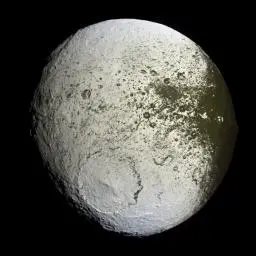
| Type | Moon |
|---|---|
| Diameter | 1,469 km |
| Surface Temp | 110 K |
| Orbital Period | 79.3 Days |
Iapetus is a moon of Saturn. It's mostly composed of ice. Iapetus's most notable feature is the large dark region making up its trailing hemisphere. The difference in composition between these two regions is not well understood.
Uranus
| Type | Ice Giant |
|---|---|
| Diameter | 51,118 km |
| Mass | 14.536 Earths |
| Surface Temp | 76 K |
| Orbital Period | 84.02 Years |
| Moons | 28 |
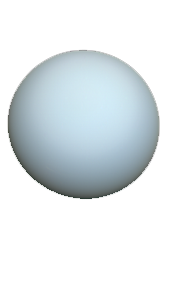
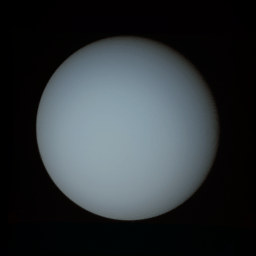
Uranus is the first of the ice giants. Uranus is the only planet which rotates sideways (east to west). Uranus has a small ring system (larger than Neptune, but smaller than Jupiter).
Neptune
| Type | Ice Giant |
|---|---|
| Diameter | 49,244 km |
| Mass | 17.147 Earths |
| Surface Temp | 72 K |
| Orbital Period | 164.85 Years |
| Moons | 16 |
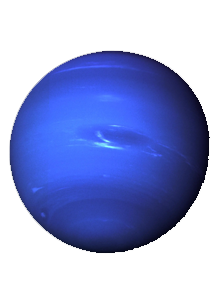
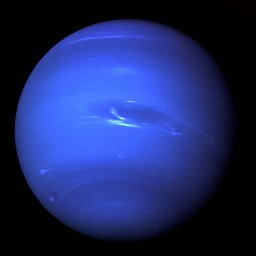
Neptune is the eighth and final planet in our solar system. More information about Neptune coming soon.
Triton
| Type | Moon |
|---|---|
| Diameter | 2,706.8 km |
| Surface Temp | 38 K |
| Orbital Period | 5.876 Days |
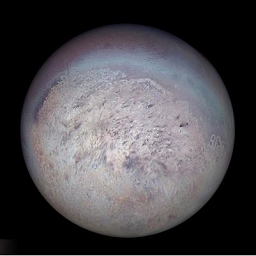
Triton is thought to have once been a dwarf planet in the Kuiper belt.
Kuiper Belt
| Type | Belt |
|---|
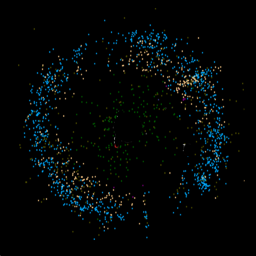
The Kuiper Belt is a region of the solar system beyond Neptune filled with icy bodies and dwarf planets.
Pluto
| Type | Dwarf Planet |
|---|---|
| Diameter | 2,376.6 km |
| Mass | 0.00218 Earths |
| Surface Temp | 44 K |
| Orbital Period | 247.94 Years |
| Moons | 5 |
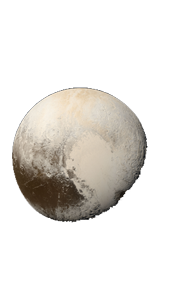
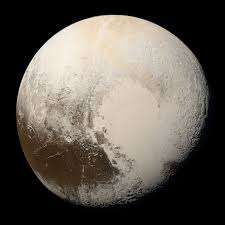
Pluto was once a planet, now it's been relegated to simply just a dwarf planet. Despite this demotion, Pluto remains a fascinating world with a diverse and complex geology.
Arrokoth
| Type | Kuiper Belt Object |
|---|
Arrokoth is a distant Kuiper Belt object visited by the New Horizons spacecraft. It's a contact binary (two bodies orbiting each other while touching).